If you want to learn which edible mushrooms occur in Romanian forests, start with a few familiar groups: porcini, chanterelles, saffron milk caps and parasol mushrooms. This guide explains their usual season, habitat and visible field clues, plus the specimens you should leave behind.
Which mushrooms should a beginner look for?
Begin by learning a small number of common groups and the place and season in which they normally appear. Do not try to identify every mushroom you see.
Four common groups worth learning
Seasons vary with altitude, rain and temperature, but these clues tell you where to begin looking:
- Porcini / cep: on the ground in deciduous or conifer woodland, usually from summer into autumn; look for pores rather than gills beneath the cap.
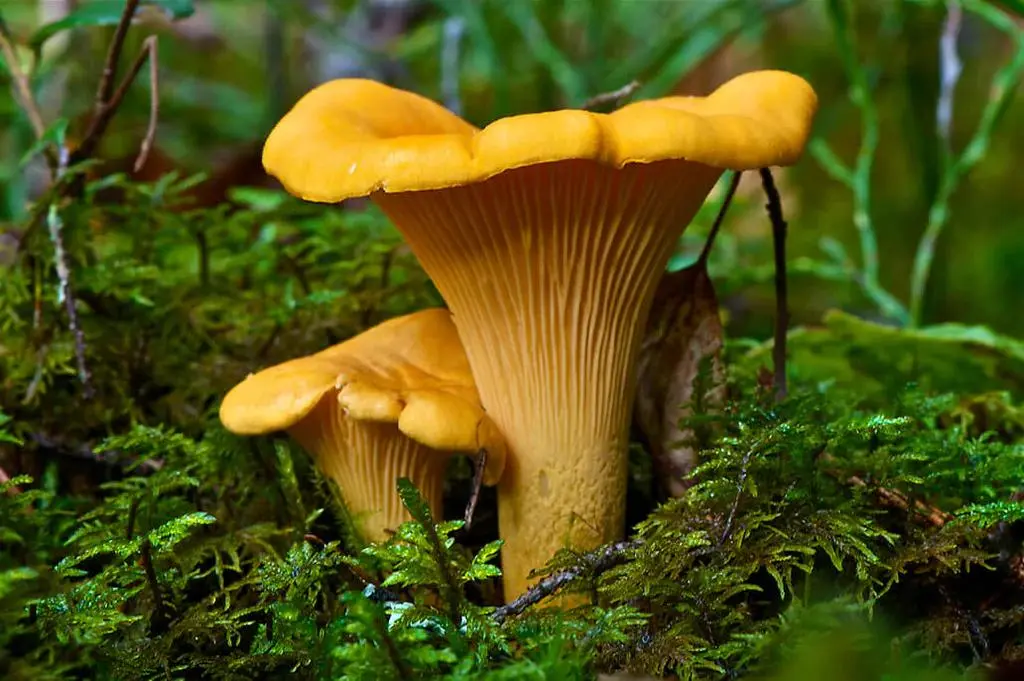
- Chanterelles: on the forest floor near trees, often after rain from summer into autumn; look for thick, forked ridges rather than thin blade-like gills.
- Saffron milk caps: mainly with pine from late summer into autumn; orange concentric zones and orange latex are useful clues.
- Parasol mushrooms: in clearings, open woods and grassland from summer into autumn; learn only mature, fully opened specimens.
What to check before putting a mushroom in the basket
Check all of these together, never just cap colour:
- Cap: Shape, color, texture (smooth, scaly, velvety), size, and margin (edge) characteristics
- Underside: Presence of gills, pores, teeth, or ridges; their color, density, and attachment to stem
- Stem: Height, thickness, texture, color, presence of rings or volva (cup-like base)
- Flesh: Color when fresh and when cut or bruised; texture; any color changes when exposed to air
- Smell: Note it without tasting an unknown mushroom
- Habitat: Where it grows (conifer/deciduous forest, open fields, etc.) and what it grows on (soil, wood, etc.)
- Season: Time of year when it typically appears
Stop signs: when to leave it behind
Leave behind very young, old, soft, mouldy or incomplete specimens. Also stop if the habitat or underside does not match what you expect. Important dangerous groups and look-alikes include:
- Amanita species - Particularly Amanita phalloides (Death Cap) and Amanita virosa (Destroying Angel)
- Galerina marginata - A small, brown mushroom containing the same toxins as Death Cap
- Gyromitra esculenta - False Morel, sometimes mistaken for true morels
- Omphalotus olearius - Jack-o'-lantern mushroom, which can be confused with chanterelles
A simple field checklist
For every find, photograph the cap, underside, stem, intact base and habitat. Record the date and nearby trees. Keep unknown specimens separate. The following reactions can be useful notes, but none proves edibility:
- Bruising Test: Gently bruise the flesh and observe any color changes
- Stem Snap Test: How the stem breaks can indicate whether it's fibrous or brittle
- Latex Test: Some mushrooms (like Lactarius) exude "milk" when cut - note its color and whether it changes color
Safe Foraging Practices
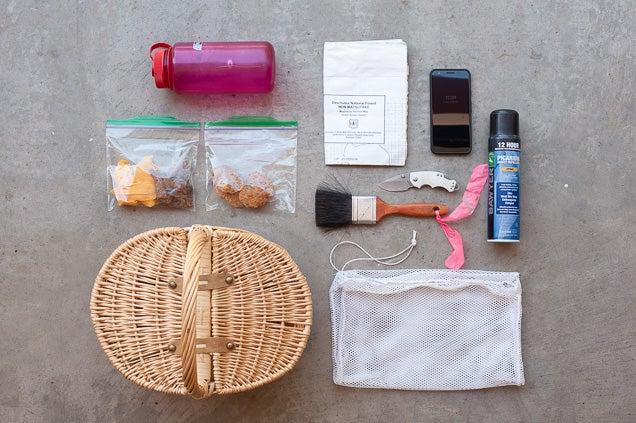
Equipment for the Beginner Forager
Before heading to the forest, prepare yourself with:
- A good field guide specific to Romania or Eastern Europe
- A knife with a curved blade for harvesting
- A basket or mesh bag (never plastic bags, which accelerate spoilage)
- Paper bags or waxed paper for separating different species
- A small brush for cleaning
- A notebook to record details of your finds
- A phone or camera for documenting the complete specimen and habitat, not for deciding whether it is edible
Ethical and Sustainable Harvesting
Follow these principles to ensure you're foraging responsibly:
- Take the whole mushroom, including the base, when it needs identification
- Leave very young, old, damaged or insect-ridden specimens
- Take only what you can identify, check and use
- Keep different species separated in a ventilated basket, never a closed plastic bag
- Avoid roadsides, industrial areas, dumps and other polluted places
- Respect local rules, private land and protected areas
Common Edible Mushrooms of the Apuseni Mountains
The Romanian Carpathians, particularly the Apuseni range, are home to many prized edible species. Here are some of the most commonly found edible mushrooms with distinctive identifying features:
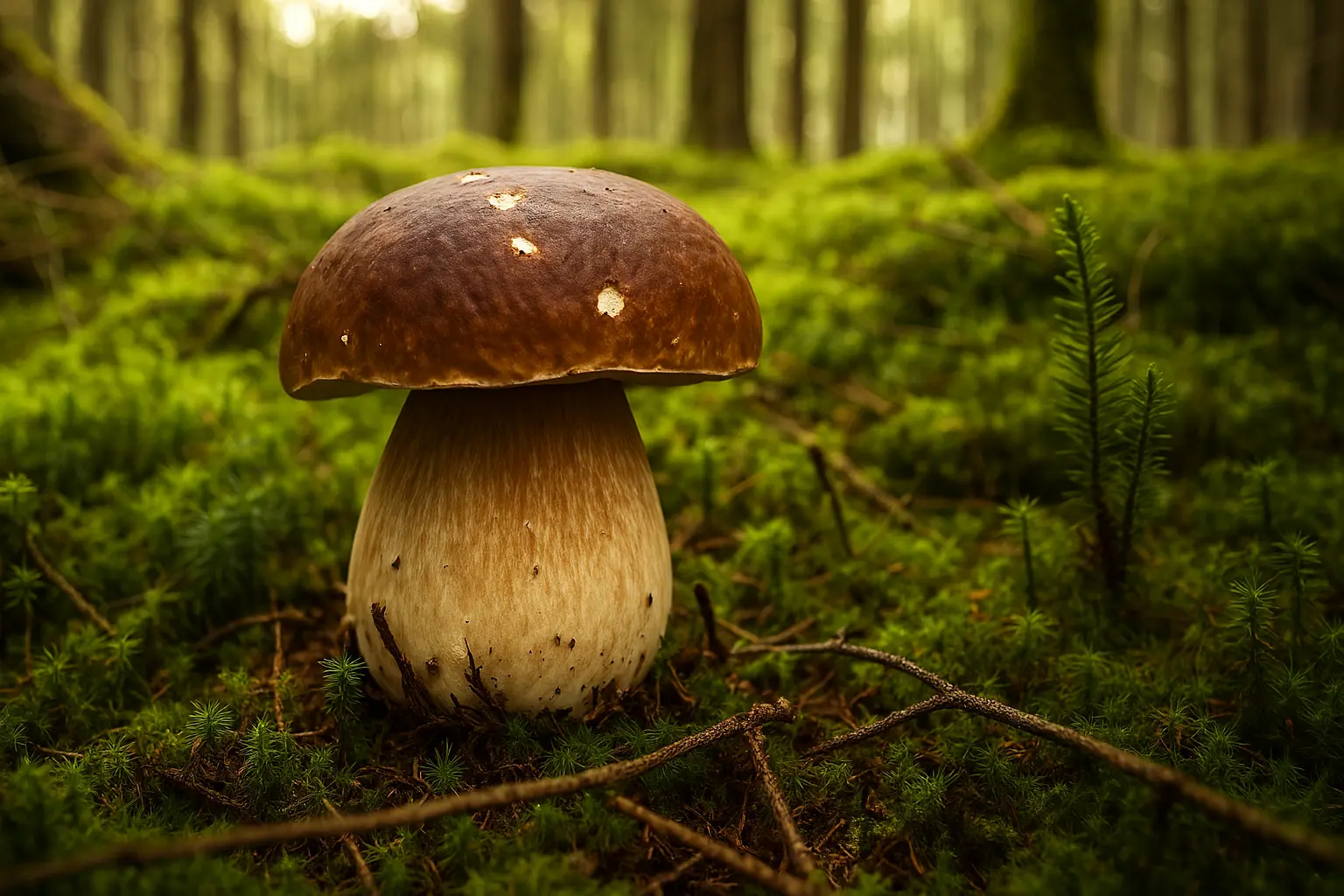
Boletus edulis (Porcini/Hribi)
Where and when: on soil with oak, beech and conifers, from summer into autumn. Look for: a brown cap, white-to-olive pores, a thick stem with a fine pale network and white flesh that does not turn blue. Leave behind: red-pored, strongly colour-changing, very soft or uncertain boletes.
Cantharellus cibarius (Chanterelle/Gălbiori)
Where and when: on the forest floor near trees, often after rain from summer into autumn. Look for: an irregular funnel shape and blunt, forked ridges running down the stem. Main warning: orange mushrooms with true blade-like gills, especially clusters growing from wood, are not collected as chanterelles.
Lactarius deliciosus (Saffron Milk Cap/Râșcovi)
Where and when: chiefly with pine, from late summer into autumn. Look for: an orange zoned cap, orange latex when cut and green staining on older specimens. Main warning: several milk-cap species look similar; orange colour or latex alone is not enough.
Macrolepiota procera (Parasol Mushroom/Buretele șerpesc)
Where and when: clearings, forest edges, paths and old grassland from summer into autumn. Look for: a mature tall mushroom, large scaly cap, movable ring and brown snakeskin pattern on the stem. Leave behind: closed young specimens and small parasol-like mushrooms, which are easier to confuse.
Conclusion
Learning to identify wild mushrooms is a lifelong journey that rewards patience and careful study. Remember that no article or book can replace direct examination by a qualified specialist. At Trans Fruit SRL, identification is a control step before commercial lots are sorted and processed.
We encourage all beginners to start with guided forays, local mycological society events, or courses before venturing out independently. With proper education and a respectful approach to nature, mushroom foraging can become a deeply rewarding connection to the ancient forests of Romania.
Safety sources
You might also like
The Art of Mushroom Hunting in Apuseni Mountains
May 12, 2025
The Drying Process: How We Preserve Mushrooms Naturally
February 20, 2025